There aren’t many things I miss about Berlin. It’s a big, dirty city, noisy and always on edge. But there is one thing I crave from time to time: the stillness you can experience in a very special place.
Near the main station, there’s a spa spread across 20,000 square meters, designed to imitate Asia, with saunas, pools, sunbeds, couches, beds, and even fireplaces. What makes this place unique isn’t just its style, but the absolute stillness you can experience there.
Phones aren’t allowed, and neither is speaking. It’s a place to be quiet and rest. Sometimes you see people in their bathrobes lying on couches, asleep, and you realize they’re not there for fancy spa treatments, they’re there to enjoy something increasingly rare in the age of smartphones and constant connectivity: a true digital detox.
Lying in my bathrobe, holding a glass of prosecco, surrounded by quiet people, it feels like a scene from a utopian film where everyone is fully present, doing nothing but enjoying the moment. In the room with waterbeds, you don’t fall asleep out of exhaustion, but out of pure relaxation. It’s a rare kind of rest, one that doesn’t come from needing sleep, but from finally letting go.
People familiar with fasting understand that taking a break isn’t just about losing weight, it’s about detoxifying the system, giving it a reset so it can function properly again. Similarly, a digital detox allows us to rest, recover, and reset. Yet stepping away from the online world has become almost impossible. We justify it by saying we need it for work or to stay in touch, but in reality, we spend far too much time doom scrolling and overwhelming our minds.
Imagine not eating three to five times a day, but every 10 to 15 minutes. It would be exhausting. And yet people wonder why they struggle to fall asleep, wake up more tired than before, and can barely focus. We’ve created a world that holds us hostage, and now we’re searching for an escape back into reality.
I set a clear goal to reduce my screen time just as the war with Iran broke out. Instead, I found myself glued to my screen 24/7 – not even watching the news, but consuming endless updates through social media. It didn’t just cost me sleep; it affected my appetite, reduced my movement, and kept me hooked on constant dopamine hits tied to current events.
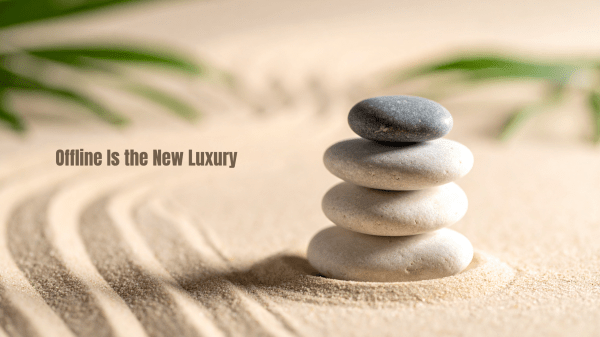
That’s why I keep thinking about the stillness of Vabali Spa in Berlin, a place where even workaholics slow down, rest, and sleep, and where being offline feels like a luxury. I wish for more of that kind of life for all of us: more time away from the online world, and a kind of intermittent disconnection that keeps our minds clear and our systems sane.
 my beatitude