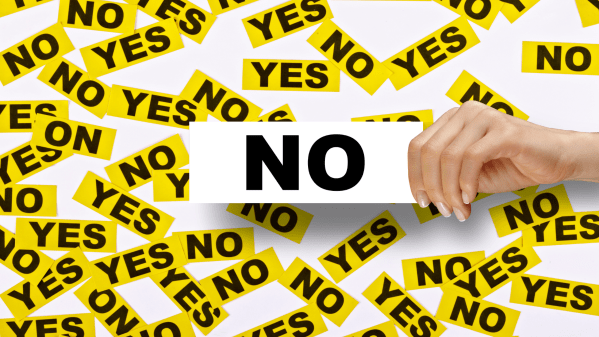
Redefining Boundaries: The Art of Saying No Without Guilt
Our world is built on boundaries. Political, religious, ideological – lines drawn, respected, and sometimes fiercely defended. Yet, when it comes to personal boundaries, why does it feel like an uphill battle? A boundary isn’t just about how we feel in a certain situation; it’s about how we define our limits with the world around us.
Most of us were never taught how to set boundaries. Saying “no” was met with guilt, rejection, or shame. We learned to avoid confrontation, to soften our stance, to find polite excuses rather than assert our limits. The fear of an adverse reaction keeps us trapped in patterns of accommodation. Instead of defining our space, we choose the path of least resistance – silence, avoidance, self-betrayal.
Recently, I heard a definition of boundaries that struck me: A boundary is set by communicating it, and the only thing the other person needs to do is accept it. In theory, this sounds simple. In reality, it’s the opposite. Since I moved away from the Europeean mainland, setting boundaries has become less of an act and more of a challenge – one that is constantly tested. I have countless examples of moments where I clearly expressed my limits, only to watch them be ignored, dismissed, or outright bulldozed.
In Germany, we have a saying: The wiser one gives way. A noble sentiment – until you realize what it really means. If the wise always step aside, who ends up running the world? The selfish. The ignorant. Those who push forward without regard for others, while the thoughtful and considerate continue making space.
I consider flexibility one of my greatest strengths. It allows me to blend into any environment without resistance. I don’t struggle with differences because I expect them. I accept people as they are, but that doesn’t mean I let them into my energy. Not if it doesn’t feel aligned.
Flexibility is a sign of mental health. But I refuse to twist myself to accommodate people who see only their own perspective. I love strong opinions. I have my own, and I don’t keep them to myself. But over time, I’ve learned to choose my battles. The truth is, most people struggle to accept even the smallest difference in perspective.
So how do we set boundaries in a world where insecurity and fragile egos dominate? In a time where even the mildest expression of truth can feel like an attack?
- Recognize that setting boundaries isn’t about others – it’s about us. It’s the point where we end and our environment begins.
- Understand that internal boundaries aren’t enough. We need to verbalize them, even in the smallest moments where it feels easier to let it slide.
- Accept that boundaries will upset people. Especially those who never learned to have them.
And this brings me to the American lady in Pakistan. She put herself in a desperate, seemingly hopeless situation. Setting aside any mental health concerns, what struck me was her ability to stand her ground. She was unwavering. Perhaps a bit delusional, but absolutely firm in what she would and would not allow. She accommodated no one.
I’d rather set my boundaries like her – boldly, unapologetically – than betray myself just to keep the peace.
 my beatitude