What They Don’t Teach Us About Discipline

Discipline is often viewed as something restrictive, especially in the early stages of life. But as we grow and gain perspective, we begin to see it for what it truly is: a path to liberation.

As children, we are shaped by the firm hands of authority, parents, teachers, caretakers, who believe that instilling discipline early on gives us an advantage in life. While this perspective isn’t entirely wrong, it misses a deeper truth.

Today, we understand that childhood should also be filled with light-heartedness, play, and joy. Interestingly, a recent study suggests that if you want your children to grow up intelligent and capable, it’s better to teach them music than coding.

I was raised to be an achiever, someone tasked with fulfilling the unmet ambitions of my mother. As a result, I learned early on that my value was tied to achievement. For a while, life seemed easy. I followed the expected path, met the milestones, and checked the boxes. But there was a hidden cost.

It’s difficult to feel fulfilled when you’re always chasing the next goal. Once you reach the peak, all you can see is the next mountain. Nothing is ever enough. You’re like the donkey endlessly chasing the carrot tied to its own back: always striving, never arriving.

On the other hand, what happens when discipline is lacking? You begin to see it manifest as scattered, “leaky” energy—gluttony, overspending, compulsive behaviors, gambling, and impulsive indulgence. These aren’t just bad habits; they’re symptoms of an inner imbalance. Without discipline, you’re constantly feeding the angry wolf within.

“Everyone wants to heal until the medicine shows up in the form of discipline.”
— Hippocrates

No one tells us that discipline is actually the highest form of self-love.

As children, we’re subjected to discipline imposed by others. That external control becomes our internal voice, and we assume we’ve learned discipline. But there’s a world of difference between the discipline imposed on us and the self-discipline we choose for ourselves.

True discipline, the kind that leads to freedom, comes from within. It’s the structure we build for ourselves, on our terms, and for our highest good. This kind of discipline not only frees us from self-destructive behaviors but also teaches us what love looks like in adulthood.

Unlike the unconditional love we received as children, where we were often shielded from consequences, adult love requires boundaries, effort, and consistency. Discipline transforms love from a fleeting feeling into a deliberate practice.

What feels good in the moment can be completely wrong in hindsight. Discipline teaches us to recognize that difference. It helps us build inner strength and resilience, because we learn to trust ourselves. We keep our word. We show up. We become our own reliable ally.

Putting yourself first and showing up for your life won’t be possible without discipline. It’s not just about being rigid or serious. Discipline helps you stand firm, stay grounded, and face life’s challenges with confidence.

I’m not writing these words because I read them in a book. I write them from experience. I grew up under intense control and pressure, and for much of my adult life, I resisted discipline entirely. I was on the opposite end of the spectrum.

But learning self-discipline as an adult has been one of the hardest, and most rewarding paths I’ve ever taken. Paradoxically, the more disciplined you become, the easier life becomes.

If you’re on the fence about discipline, if it still feels like punishment or pressure, consider that it might actually be your pathway to peace. Discipline isn’t about control; it’s about care. It’s a declaration that your life matters enough to shape intentionally.

When you begin to practice discipline not as a demand, but as a devotion to yourself, everything starts to change. Bit by bit, you stop chasing the carrot, and realize you were the one holding the reins all along.
Why We Reach Material Goals Faster, but Thrive Deeply in Our Ego-Free Era

Now that I am officially middle-aged, I have witnessed profound changes in the second half of my life. In my 20s, I was always on the move, surrounded by a bustling crowd and focused on external appearances. Today, I prefer moving slowly and intentionally, choosing my company wisely. Instead of worrying about how others perceive me, I now turn inward, finding validation within rather than from the outside world.

One of the most striking changes is how I achieve my goals. In my youth, my wishlist was filled with tangible desires: a great body, a fast car, a well-paid job. These goals were clearly defined and felt attainable because so many had followed similar paths before me. I simply had to mimic the steps of those who came before.

As time went on, my aspirations became more abstract. Concepts like freedom, success, and happiness are common, yet each of us defines them in our own unique way. For one person, freedom might mean the ability to travel whenever the mood strikes, while for another, it means having the time to organize everyday life on one’s own terms. Similarly, success can be both an internal feeling of fulfillment or an external sign of achievement, like a flourishing career or a loving family.

Happiness, too, is deeply personal. Some thrive in community, surrounded by people, while others find absolute fulfilment in solitary pursuits – whether that’s conquering Mount Everest or living a minimalist life true to their values. Happiness isn’t something handed to us; it’s something we create through our life experiences. Perhaps that’s one of life’s greatest challenges – not just overcoming difficulties, but discovering and nurturing our own unique bliss.

So, why do people achieve material goals faster? It’s simply the way life is structured. Our hierarchy of needs targets the physical realm first, pushing us to obtain the tangible things we think we desire. Yet, if these aspirations are largely influenced by external messages, such as advertisements, they may not truly originate from our inner selves. Achieving these general goals rarely brings long-term satisfaction.

Building a life based on inner values and personal wishes, however, takes longer. These goals are not prepackaged for us; they are abstract and often remain undefined until we embark on our own inner journey of discovery. Unlike the clear, copy-paste paths of youth, this process is about creating something uniquely your own – guided by personal values, preferences, and the courage to forge a path that is distinctly yours.

In my ego-free era, I no longer focus on external markers of success. My attention is solely on how my life, circumstances, and relationships make me feel. When I set a goal, I start by cultivating it internally. I feel it, imagine it, and even sit with its absence until I gradually build it from within. For me, nothing in the external world is fully realized until it’s first made real on the inside.

This inner work is like crafting bread: you need a recipe, the right ingredients, an understanding of the process, and the patience to let the dough rise in the perfect environment. In the second half of life, we become our own ingredients, trusting both the process and our inner guidance. The results can be inspirational – not because they follow a formula, but because each outcome is as unique as the person who created it.

The Age of Aquarius

Between Hyper-Independence and Human Needs

We are living in unprecedented times – a millennial shift that redefines humanity’s trajectory. The technological advancements of the past century have catapulted us into an era of transformation that feels like a 1,000-year leap forward. It’s awe-inspiring yet daunting to grasp the pace of change around us.

Technology: Connecting and Isolating Us

Predicting what our work life will look like in a decade feels impossible. What’s clear, however, is that technology both connects and isolates us. According to a report, the average person now spends over 6 hours daily online, with 3 hours on their phone alone. Last week, I discovered I was spending the same amount of time – nearly 19% of my waking hours – scrolling, texting, and watching, much of it on distractions or maintaining a digital avatar.

This constant online presence creates a false sense of connection. Seeing people online tricks us into believing we’re close, but in reality, it often keeps relationships at a safe, emotional distance. For someone like me, who has always embraced hyper-independence, this digital closeness feels convenient. It supports my need for self-sufficiency and reinforces a belief that I can function entirely on my own. But is this truly sustainable?

Hyper-Independence: A Double-Edged Sword

Hyper-independence, often celebrated as strength, can mask deeper wounds. Research suggests that one-third of adults in Western societies identify as self-reliant to the point of avoiding vulnerability. While these traits make individuals adaptable and highly functional in workplaces where emotional regulation is key, it’s worth noting that humans are biologically wired for connection.

What I once saw as a badge of honor – handling everything on my own – I now recognize as a trauma response. We may thrive in environments that value independence, but suppressing the need for human connection ultimately leaves us depleted.

Our Soul’s Cry for Rest

In our “busy is better” culture, we’ve normalized an unsustainable pace of life. Today, the average person processes five times more information daily than someone in the 1980s, and the mental load can lead to chronic stress, burnout, and emotional numbing. No wonder studies show that 85% of people worldwide feel emotionally disengaged.

Downtime isn’t a luxury; it’s a necessity. Just as we need food and sleep, we need moments of stillness to recalibrate. I’ve found that dedicating one full day a week to rest allows me to recharge and maintain my emotional well-being. Without it, I’d risk losing touch with myself in the endless stream of notifications and to-do lists.

The Soul and Technology: An Uneasy Relationship

The rise of AI and advanced technologies has only deepened the tension between connection and isolation. People are increasingly turning to AI not just for practical advice but for existential guidance. Instead of looking inward, we seek answers externally, relying on technology to fill emotional voids.

What we forget is that each of us carries an innate intelligence – call it intuition, consciousness, or soul-level awareness. But tapping into it requires courage and stillness, something we’re losing in the digital age.

Staying Grounded Amid Rapid Change

As technology propels us forward, staying grounded becomes more challenging yet more essential. Personally, I’ve found solace in rituals – small, meaningful practices that reconnect me to my center. Whether it’s journaling, mindful walks, or simply disconnecting from screens, these routines help anchor me amid life’s whirlwind.

Interestingly, this rapid pace of change often makes life feel longer. More jobs, more cities, more relationships – our lives are now packed with experiences that previous generations would spread across decades. While exciting, this acceleration forces us to develop tools to stay connected to our humanity.

The Future: Humanity or Machine?

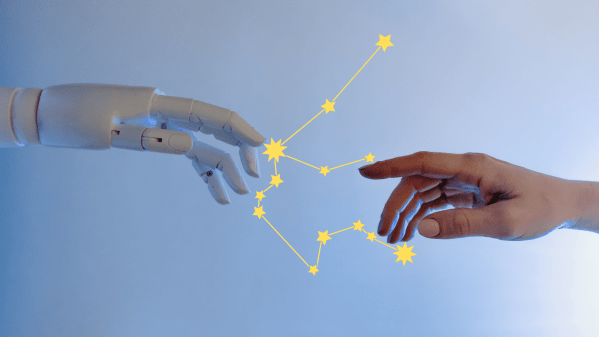
We stand at a crossroads. As technology becomes inseparable from our daily lives, humanity faces a divide: between those who embrace the metaverse and those who seek higher consciousness. This isn’t just a philosophical shift – it’s a practical one. The future may hold a union between soul and technology, allowing us to live more authentically through innovation.

However, the mind alone cannot lead us there. Historically, the mind has been a flawed guide – prone to ego, insecurities, and avoidance of pain. If we fail to lead with emotional courage and open-heartedness, we risk becoming like the very robots we’re building.

Closing Thoughts: Welcoming the New

The structures of the past are crumbling, making way for something entirely new. Whether this shift elevates humanity or diminishes it will depend on our ability to balance technological advancement with emotional and spiritual growth. Perhaps in 50 years, we’ll find ways to connect our essence with technology, allowing us to thrive in a way that honors both our humanity and innovation.

Until then, the choice is ours: Will we let technology guide us, or will we use it as a tool to amplify our deeper, truer selves?

How to Make the New Year Count

Some people live the same year 50 times over and call it a life. If you want this year to outshine the last, you need to create the change you desire. Growth, transformation, and progress should be visible in our lives. So, what often holds us back?

Habits, comfort, excuses, and inaction. These barriers, when examined, are surprisingly easy to dismantle. Comfort, while tempting, can become a trap. Seek comfort in your personal life, at home, and in relationships, but in your career and self-growth, always choose the challenge.

Excuses stem from the stories we tell ourselves. It’s not about what you say to others; it’s about what you do with integrity. Stop justifying inaction or empty promises – it only undermines your potential.

Inaction is the next hurdle. When your words and actions don’t align, it’s a sign you’re not yet the person you aim to be. Your actions are the steps that bridge the gap. It’s as simple as that.

Finally, our habits shape not just us but also our lives. Small comforts and instant gratifications can lead to significant costs down the road. Habits are powerful; they create structure and routine. But if your habits are dragging you down, it’s time for a shake-up.

Self-Assessment

Looking back at last year, I made significant changes. I approached my goals differently. Rather than setting goals for 2024, I focused on intentionality and chose five guiding values to shape my year.

1. Commitment: As a Gemini, I’ve often been seen as noncommittal, but I set out to prove otherwise. My mother used to call me a short-distance runner because I would pivot frequently. In 2024, I fully committed to creating a new path and stuck with it.

2. Consistency: Success demanded consistency. I promised myself to stay consistent in everything – from my diet and workouts to learning and self-care. This energy of consistency transformed every aspect of my life.

3. Creativity: Creativity, like curiosity, is a hallmark of intelligence often overlooked. I embraced creativity to balance my commitment and consistency, allowing space for innovation and self-expression.

4. Balance and Wellbeing: I prioritized my wellbeing, getting into the best shape of my life, adopting healthy routines, and embracing healing practices like hypnotherapy and meditation. This elevated me mentally and spiritually.

5. Pleasure: Pleasure, like creativity, is unpredictable but essential. We often forget to savor life’s small joys. Pleasure as a value means pausing to indulge in the things that make you feel alive.

Change

How did it all unfold? Last year was transformative. It wasn’t about meeting a checklist but about rising to a new energetic level daily. Fulfillment became a daily experience rather than a conditional one.

By embodying these values through action, I brought meaningful change to my life. I truly made 2024 count and am eager to do the same for 2025.

Dreaming Big

Why do we find it so hard to dream big but so easy to find reasons why our dreams won’t work? It’s easier to cling to the familiar than to venture into the unknown. For much of 2024, I faced the unknown, enduring uncertainty, and exercising patience. It was draining but ultimately rewarding.

Now, nothing feels impossible. I’ve seen how far commitment and consistency can take me. As 2025 begins, it’s time to dream even bigger and create even greater things – things that reaffirm the power of my vision and actions. This year, I’ll pick new values that will guide me toward even greater fulfillment.

Blog at WordPress.com.

Up ↑