How to Keep Energy from Places Within

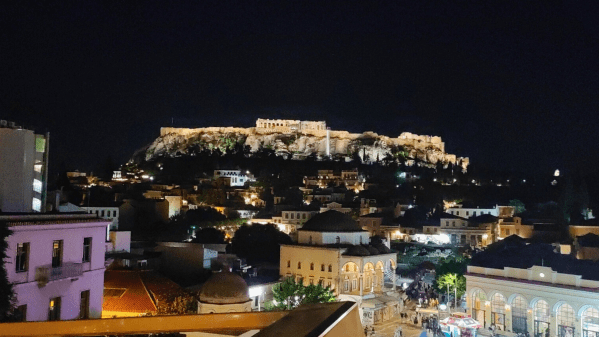
I recently visited Athens and didn’t expect the profound transformation this trip would bring, nor how it would stay with me energetically. We all know the pleasure of travel: the joy, the excitement. But once we return home and settle back into our routines, the lightness and pleasant energy we felt tends to fade.

I began wondering how I could make this fleeting energy last. That led me to reflect on spiritual practices. In these, too, we reach elevated states momentarily but train ourselves over time to maintain that energy more consistently, until we can eventually access it on demand.

What we do frequently becomes our frequency.

Now let’s shift to less pleasant situations. We all remember the feeling of dreading a job we disliked. Our bodies already anticipated the heaviness of the experience, making it hard to show up. In contrast, when going on vacation, it’s easy to leap out of bed at 5 a.m., fueled by excitement and anticipation.

Having a routine keeps us grounded, but we also need experiences that nudge us into the discomfort of the unknown. Excitement, positive anticipation, and unpredictability are key ingredients of a joyful life. So, back to the travel example: how can we stop ourselves from energetically slipping back into the mundane after a powerful experience?

1. Connect with Your Experience Energetically

When you travel or encounter something extraordinary, do it intentionally and with present-moment awareness. Travel has become a form of performance for many, and it’s common to see people glued to their phones, missing what’s happening around them. Truly being present is the first step to forming a deeper, lasting energetic connection.

2. Create Anchors and Rituals

While immersed in your experience, establish small rituals or “anchors” to revisit that energy later. These can include telling yourself a meaningful story, taking photos of specific details, or simply walking through a space with mindful curiosity. These moments become energetic bookmarks you can return to at any time.

3. Craft a Story of Meaning

Visiting a place superficially won’t leave a lasting impact. But when you create a personal narrative around your journey and internal shifts, the experience becomes part of you. It transforms into something no one can take away.

Visiting Athens right before my birthday felt divinely timed. As a Gemini, I’ve often been labeled “two-sided” or “dual-natured.” Just before my trip, I heard something powerful: that Geminis are messengers between the seen and unseen, the physical and the spiritual.

In Athens, I truly felt aligned with my nature: head in the sky, speaking to the gods; feet on the ground, discovering the city. I was deeply present, taking in the smells, sounds, colors, and light. I allowed myself to be flooded with emotion, attuned to the city’s shifting vibes. Simultaneously, I sensed a higher presence and the city’s energetic history.

It felt as though I were in two places at once, not in time or space, but in energy. The energy of an ancient empire and the energy of a modern Mediterranean metropolis. We don’t need time machines if we can tap into a place’s energy. I imagine this is how more advanced civilizations might have felt about us, seeing beyond the physical into the energetic realm.

Ultimately, forming a lasting energetic connection to a place depends on your ability to be fully present and emotionally open. In a world constantly pulling our attention outward, becoming the energy we seek is a radical act of rebellion and self-preservation.

A Note to my Younger Self

We move through life facing forward, but we only understand it when we look back. I used to think I was aware and made conscious decisions early on. But a recent visit from a school friend showed me how much of our path is shaped by things outside our control. Our emotional background, our upbringing, and the environment we grow up in leave little room for real freedom. Often, we just become what was programmed into us. Free will and building a life we truly love can feel like something out of reach, as if life is just happening to us.

When I ask people about their lives, most describe what happened to them rather than what they intentionally created. This is the difference between people who live out of fear and those who live from the heart. People guided by fear tend to play it safe, play small, and shape their lives to meet others’ expectations. In doing so, they give up the chance to live in alignment with who they really are.

Spending a week with this friend from the past was a meaningful experience. We hadn’t seen each other in 23 years. At 15, we were still untouched by much of what life would later bring. Telling your life story to someone who knew you back then feels very different. They’re not a stranger. They knew a version of you that most people in your adult life have never met. Being able to speak freely, without fear of being judged or misunderstood, was deeply healing.

We didn’t just talk about what happened in the last two decades. We also talked about what was really going on back then, beneath the surface. The emotional and mental patterns from our teenage years had a strong influence on what followed. Reflecting on that, together and openly, brought clarity. When someone truly listens and sees the full picture, with all its good and bad parts, it creates understanding.

If I could go back and say one thing to my younger self, it would be this: No one is coming to save you. You are the one who will make things happen. You are the turning point. When I stopped waiting for someone or something to fix my life, I saw that I had the power to change it. We are all born with the ability to create. Each of us has a purpose.

It took me a long time to figure out what mine is. I kept searching for answers. I tried coaching, courses, and even studied Kabbalah. Still, the answer stayed unclear. Maybe I didn’t trust that it would come when the time was right. I often felt like I didn’t fully belong anywhere. Being from Poland but growing up in Germany left me in between two worlds. Later, when I found the spiritual path, I understood I didn’t need to belong to any group or place.

I also often felt ungrounded, like I wasn’t attached to structure or tradition. I lived based on my inner compass and created my own rules. But trying to belong always felt restrictive. Looking back, I see now that I wasn’t meant to fit in. Maybe true connection in the way I hoped for isn’t part of this life’s path for me.

What I do know is this: I am here to help others feel connected. I do this by offering new perspectives, encouraging self-awareness, and supporting consciousness. Being in between cultures, ideas, and experiences is exactly where I need to be. It allows me to build bridges for people who want to explore something beyond the physical world. I feel most aligned when I can offer something true and meaningful, something that cuts through the noise and brings real value in a world that often feels distracted and disconnected.

How to Get Into the Habit of Just Doing It

The world is divided into thinkers and doers—and only about 20% of people are truly doers. Shocking, right? But that’s not the focus of this article.

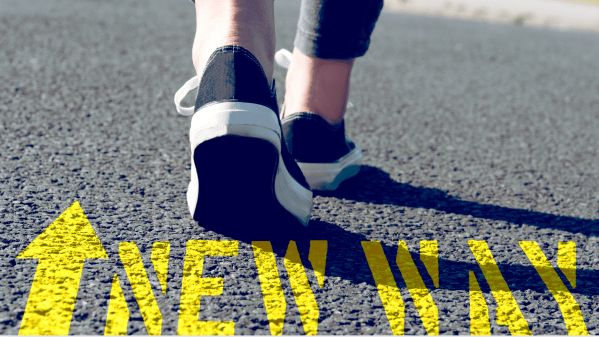
Rather, this is about learning how to face challenges and move forward into unfamiliar territory. What happens when our routine is disrupted? When we’re pushed beyond the familiar and into unfamiliar territory? This matters now more than ever. In today’s rapidly changing world, losing a job can mean losing your professional identity—and being forced to reinvent yourself entirely.

Last year, I met someone who had just lost his job after 26 years. He was in his mid-50s and completely adrift. While spending time with him, I often heard him say, “I have no idea what I’ll be doing. I have no clue what I could do. I don’t know how this will end.” It became a sort of mantra, and all I could think was: This poor man—his mind won’t stop reminding him that he hasn’t even begun to figure things out.

What Happens After Loss

After any major life change, the first instinct is to assess your situation. Even if you welcomed the change, there comes a moment when your thoughts pull you inward. Suddenly, a reel of worst-case scenarios starts playing in your head. That voice? It’s your ego—trying to protect you by keeping you in your comfort zone, using fear as its tool.

Why the Mind Gets in the Way

You can’t discover new paths with old thinking. Most of your thoughts aren’t even original; they’re borrowed—recycled ideas picked up over time. When we face the unknown without an open heart, anxiety and fear rush in. Unfortunately, once your mental carousel starts spinning, it’s tough to slow it down and regain a sense of possibility.

But the ego isn’t all bad—it can also serve a purpose. It forces you to focus inward. In times of uncertainty, it’s important not to dismiss or suppress discomfort. Instead, sit with it. Acknowledge it. Reconnect with your goals and values, and then choose your new direction. I went through this myself last year while transitioning into a new career. It felt like I was wasting time, stuck in limbo. But I learned that creating a path is not the same as walking it.

Why Action Is Everything

My love-hate hobby is sewing. Why? Because, as a covert perfectionist, it challenges me to take action without having everything figured out in advance—and to learn by making mistakes. That’s what sewing is all about: doing, adjusting, and continuing. It’s uncomfortable because, as adults, we carry different expectations. We plan more. We’re more cautious. Somewhere along the way, we lost the freedom to not know—and just figure things out.

When I quit jobs or moved countries, people would ask, “What are you going to do there?” My answer was always, “How could I know? I’m not there yet.” We crave control and certainty—but they’re illusions.

To Move Forward, We Must Look Back

In today’s world, adaptability is one of the most valuable skills. Living through constant change demands the ability to figure things out. We must be willing to fail fast, learn quickly, and stay open to unexpected opportunities that may better align with our goals and values.

So why does it feel so uncomfortable?

Because following your own path is slower. It’s not the fast lane—it’s the pathless path. When you tune in to your inner compass, you won’t keep pace with the crowd. You’ll be carving your own way, step by step. That discomfort you feel? It’s the feeling of expanding beyond your comfort zone. What did you expect? If it feels uncomfortable, you’re probably on the right track.

Final Thoughts: Just Start Doing

Leaning into the unknown will never feel easy. The lack of certainty breeds anxiety, and your mind will scramble for answers. But the moment you stop overthinking and start doing—even clumsily—that’s when growth begins. One imperfect step at a time.

Why We Reach Material Goals Faster, but Thrive Deeply in Our Ego-Free Era

Now that I am officially middle-aged, I have witnessed profound changes in the second half of my life. In my 20s, I was always on the move, surrounded by a bustling crowd and focused on external appearances. Today, I prefer moving slowly and intentionally, choosing my company wisely. Instead of worrying about how others perceive me, I now turn inward, finding validation within rather than from the outside world.

One of the most striking changes is how I achieve my goals. In my youth, my wishlist was filled with tangible desires: a great body, a fast car, a well-paid job. These goals were clearly defined and felt attainable because so many had followed similar paths before me. I simply had to mimic the steps of those who came before.

As time went on, my aspirations became more abstract. Concepts like freedom, success, and happiness are common, yet each of us defines them in our own unique way. For one person, freedom might mean the ability to travel whenever the mood strikes, while for another, it means having the time to organize everyday life on one’s own terms. Similarly, success can be both an internal feeling of fulfillment or an external sign of achievement, like a flourishing career or a loving family.

Happiness, too, is deeply personal. Some thrive in community, surrounded by people, while others find absolute fulfilment in solitary pursuits – whether that’s conquering Mount Everest or living a minimalist life true to their values. Happiness isn’t something handed to us; it’s something we create through our life experiences. Perhaps that’s one of life’s greatest challenges – not just overcoming difficulties, but discovering and nurturing our own unique bliss.

So, why do people achieve material goals faster? It’s simply the way life is structured. Our hierarchy of needs targets the physical realm first, pushing us to obtain the tangible things we think we desire. Yet, if these aspirations are largely influenced by external messages, such as advertisements, they may not truly originate from our inner selves. Achieving these general goals rarely brings long-term satisfaction.

Building a life based on inner values and personal wishes, however, takes longer. These goals are not prepackaged for us; they are abstract and often remain undefined until we embark on our own inner journey of discovery. Unlike the clear, copy-paste paths of youth, this process is about creating something uniquely your own – guided by personal values, preferences, and the courage to forge a path that is distinctly yours.

In my ego-free era, I no longer focus on external markers of success. My attention is solely on how my life, circumstances, and relationships make me feel. When I set a goal, I start by cultivating it internally. I feel it, imagine it, and even sit with its absence until I gradually build it from within. For me, nothing in the external world is fully realized until it’s first made real on the inside.

This inner work is like crafting bread: you need a recipe, the right ingredients, an understanding of the process, and the patience to let the dough rise in the perfect environment. In the second half of life, we become our own ingredients, trusting both the process and our inner guidance. The results can be inspirational – not because they follow a formula, but because each outcome is as unique as the person who created it.

The Price of Consumption and Worth of Creation

Why Getting What You Want Makes You Happy for 5 Minutes, but Creating Something Lasts

Consumption is detrimental to us in ways we rarely stop to consider. It numbs us, distracts us, and keeps us from what we truly want to do in life. Having lived in Western Europe most of my life, I never questioned why I always felt the need for more – more things, more experiences, more external validation. I was trapped in affluence, yet something was always missing.

I eventually left Western Europe in search of a more minimalistic and meaningful life. I let go of the constant pursuit of consumption, security, and status, and instead embraced a lifestyle aligned with my values and inner compass. My goal was to build a life I didn’t need to escape from, where activity and creation played a central role. Instead of chasing external factors and conforming to group dynamics, I wanted to follow the flow of life and reconnect with nature.

Moving to Poland was eye-opening, though not without resistance and criticism. Here, life felt more natural, more centered around family. I realized that not every external need had to be satisfied. Life happened in the safe space of the family, where not everything on the outside required a response. There was a sense of contentment that didn’t rely on constant consumption.

Years ago, I read a book by Osho in which he explored why the Western world struggles with mental health issues. He pointed out that people in the West often lack real challenges. Our minds are designed to solve problems, to face difficulties and overcome them. When these challenges do not exist on a material level, we create problems just to have something to solve.

In contrast, in many Eastern cultures, people often have little materially but everything to hope for. I especially noticed this while living in Israel, where life is undeniably difficult, yet there is a deep sense of connection and shared experience. I have never met as many creators as I did there – people who not only engage in artistic expression but also create for themselves and for others on a daily basis.

How Creation and Consumption Have Shifted Over the Last 50 Years

The balance between creation and consumption has changed dramatically over the last five decades, driven by technological advancements, economic shifts, and evolving cultural norms.

1970s–1980s: Creation in the Physical World

People engaged more in hands-on activities, building, crafting, and embracing a strong DIY culture. Home cooking, repairing items, and making music or art were integral to everyday life rather than occasional hobbies. Media consumption was limited to television, radio, and books, with fewer choices but deeper engagement.

1990s–2000s: The Rise of Mass Consumerism and Digital Consumption

Globalization made mass-produced goods more accessible, accelerating consumer culture. Cable TV, video games, and later the internet introduced 24/7 entertainment, increasing passive consumption. Creative outlets like photography and music became digitized but were still largely controlled by professionals.

2010s: The Social Media Boom and Passive Creation

Platforms like YouTube, Instagram, and TikTok gave individuals the ability to create, but much of this “creation” became tied to algorithms and external validation. Streaming services and social media made consumption hyper-personalized and addictive, shifting focus from deep engagement to endless scrolling. DIY culture resurfaced with platforms like Etsy, but mass consumer culture still dominated.

2020s: AI, Automation, and the Consumption Overload

AI-generated content, automation, and recommendation algorithms have made passive consumption effortless and overwhelming. Many people consume far more than they create, with shorter attention spans and a focus on instant gratification. The digital economy has made true creativity harder, as most content is optimized for virality rather than depth.

Where Are We Headed?

The challenge now is finding balance – leveraging technology for meaningful creation rather than being trapped in passive consumption cycles. There is a growing movement of people rejecting overconsumption in favor of craftsmanship, long-form content, and intentional living.

Scientific studies have shown that people who engage in physical work and express their creativity experience greater happiness than those who primarily consume. It is concerning that we now need to take deliberate breaks from the online world to reconnect with reality. The fact that we must escape into the real world rather than naturally live in it is alarming.

In my own life, my job requires a lot of analytical thinking and structure, which brings me into my masculine energy. To balance this, I turn to dance, writing, sewing, and cooking – practical activities that not only make me feel good but also result in tangible, meaningful outcomes.

Each expression of life is a creation. The more we embrace it, the less we need to consume.

Blog at WordPress.com.

Up ↑