Blog

Why Working on Yourself Pays Off More Than Just Working on Your Job

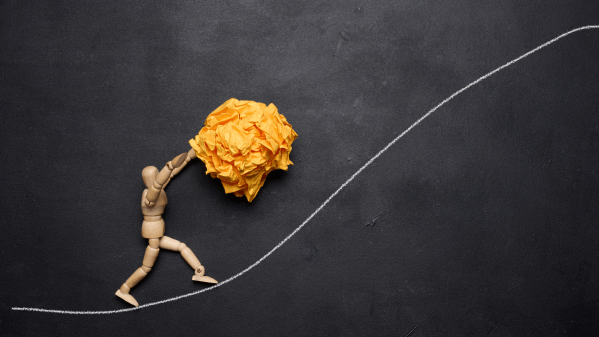
When we start our careers, we throw ourselves into the work, eager to prove our worth. We’re not just building skills – we’re shaping our professional identity, figuring out how we fit into the working world. At this stage, our success often depends on external validation: the recognition of managers, colleagues, and the industry itself.

At this point, we might find ourselves in one of two situations. If we’re lucky, we’ll have a supervisor who genuinely wants us to succeed, someone who shares knowledge, encourages growth, and helps us navigate the complexities of professional life. But we might also encounter a different kind of leader – one who believes in tough love, who withholds guidance because “nobody helped them” either. In this case, we’ll be forced to learn the hard way, dealing with difficult personalities and workplace challenges sooner than we’d like.

In these moments, our instinct tells us to double down on effort, to work harder, believing that proving our competence will make things better. But here’s the reality: the issue isn’t the person making our life difficult. The issue is our lack of experience in handling such situations. Because no matter where we go, both the supportive and the challenging people will always exist in our careers.

The key isn’t just to work harder – it’s to work on yourself.

The Shift: From External Validation to Inner Strength

As we grow, we start to see that external circumstances don’t determine our success – our ability to navigate them does. The moment we invest in building confidence, setting boundaries, and staying grounded, everything shifts.

First, we stop attracting toxic environments as often. People who once took advantage of our inexperience or insecurity no longer find an easy target. And second, when we do encounter difficult situations, they no longer shake us. Instead of reacting emotionally or overworking ourselves to prove a point, we handle them with clarity and control.

This ability – the strength to remain steady in any work environment – comes from self-worth. And self-worth isn’t just about how we feel at work. It touches every part of our lives.

The Role of Self-Worth in Your Career and Beyond

Self-worth is like an internal compass that influences everything – work, relationships, finances, health, and personal happiness. When we first enter the workforce, we rely on others to determine our value. We look to our managers for feedback, our colleagues for approval, and our company’s policies to define our professional worth. But as we gain experience, we begin to recognize our contributions, and with that recognition, we gain the power to define our own value.

This shift is crucial. Because no matter how good we are at our jobs, external factors are always changing. A company gets acquired, leadership shifts, or economic downturns force layoffs. What felt like a stable, rewarding job one day can become uncertain the next.

This is why tying our self-worth solely to our job performance is a risky strategy. We need to build our value internally – through personal growth, emotional resilience, and continuous learning – so that no external event can take it away.

The Real Work is Internal

One of the biggest misconceptions we grow up with is the belief that hard work alone guarantees success. We assume that if we do a great job, recognition, promotions, and security will follow. But the reality is, work is only a small part of the equation.

Success in any field is about much more than skill or effort. It’s about relationships, communication, problem-solving, and emotional intelligence. It’s about knowing how to navigate conflict, advocate for ourselves, and collaborate with people from different backgrounds and perspectives.

Yet, these skills aren’t something we’re explicitly taught. We learn them through experience, often the hard way. And this internal work – the process of understanding ourselves, managing our emotions, and refining our interactions with others – is far more challenging than any technical skill we could master.

I’ve never met a person who was hard on others but kind to themselves. And I’ve never met a truly happy person who made others feel miserable. How we treat others is often a reflection of our internal state. When we feel insecure, we project that onto the world. When we lack self-love, we see threats everywhere. And when we don’t trust ourselves, we assume others are working against us.

The Takeaway: Invest Where It Matters

We spend eight hours a day at work – but we spend 24 hours a day with ourselves. Both environments should feel safe. Both should be places where we feel valued and at ease.

The good news? The job you were hired for – you already have the skills. But the real work, the work that will make the biggest difference in your career and life, is the work you do on yourself.

Because when you build a strong foundation of confidence, self-respect, and adaptability, no job title, no company policy, and no difficult manager can take that away from you.

What the Lady in Pakistan is Teaching Us

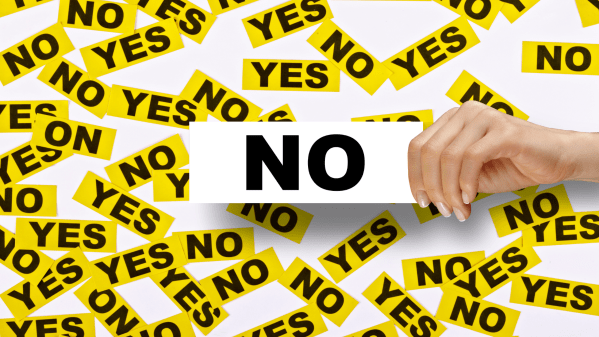
Redefining Boundaries: The Art of Saying No Without Guilt

Our world is built on boundaries. Political, religious, ideological – lines drawn, respected, and sometimes fiercely defended. Yet, when it comes to personal boundaries, why does it feel like an uphill battle? A boundary isn’t just about how we feel in a certain situation; it’s about how we define our limits with the world around us.

Most of us were never taught how to set boundaries. Saying “no” was met with guilt, rejection, or shame. We learned to avoid confrontation, to soften our stance, to find polite excuses rather than assert our limits. The fear of an adverse reaction keeps us trapped in patterns of accommodation. Instead of defining our space, we choose the path of least resistance – silence, avoidance, self-betrayal.

Recently, I heard a definition of boundaries that struck me: A boundary is set by communicating it, and the only thing the other person needs to do is accept it. In theory, this sounds simple. In reality, it’s the opposite. Since I moved away from the Europeean mainland, setting boundaries has become less of an act and more of a challenge – one that is constantly tested. I have countless examples of moments where I clearly expressed my limits, only to watch them be ignored, dismissed, or outright bulldozed.

In Germany, we have a saying: The wiser one gives way. A noble sentiment – until you realize what it really means. If the wise always step aside, who ends up running the world? The selfish. The ignorant. Those who push forward without regard for others, while the thoughtful and considerate continue making space.

I consider flexibility one of my greatest strengths. It allows me to blend into any environment without resistance. I don’t struggle with differences because I expect them. I accept people as they are, but that doesn’t mean I let them into my energy. Not if it doesn’t feel aligned.

Flexibility is a sign of mental health. But I refuse to twist myself to accommodate people who see only their own perspective. I love strong opinions. I have my own, and I don’t keep them to myself. But over time, I’ve learned to choose my battles. The truth is, most people struggle to accept even the smallest difference in perspective.

So how do we set boundaries in a world where insecurity and fragile egos dominate? In a time where even the mildest expression of truth can feel like an attack?

  1. Recognize that setting boundaries isn’t about others – it’s about us. It’s the point where we end and our environment begins.
  2. Understand that internal boundaries aren’t enough. We need to verbalize them, even in the smallest moments where it feels easier to let it slide.
  3. Accept that boundaries will upset people. Especially those who never learned to have them.

And this brings me to the American lady in Pakistan. She put herself in a desperate, seemingly hopeless situation. Setting aside any mental health concerns, what struck me was her ability to stand her ground. She was unwavering. Perhaps a bit delusional, but absolutely firm in what she would and would not allow. She accommodated no one.

I’d rather set my boundaries like her – boldly, unapologetically – than betray myself just to keep the peace.

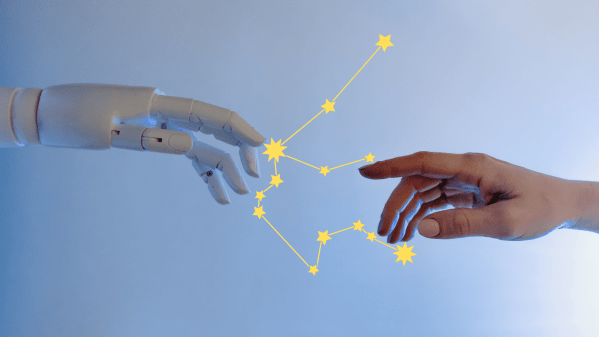
The Age of Aquarius

Between Hyper-Independence and Human Needs

We are living in unprecedented times – a millennial shift that redefines humanity’s trajectory. The technological advancements of the past century have catapulted us into an era of transformation that feels like a 1,000-year leap forward. It’s awe-inspiring yet daunting to grasp the pace of change around us.

Technology: Connecting and Isolating Us

Predicting what our work life will look like in a decade feels impossible. What’s clear, however, is that technology both connects and isolates us. According to a report, the average person now spends over 6 hours daily online, with 3 hours on their phone alone. Last week, I discovered I was spending the same amount of time – nearly 19% of my waking hours – scrolling, texting, and watching, much of it on distractions or maintaining a digital avatar.

This constant online presence creates a false sense of connection. Seeing people online tricks us into believing we’re close, but in reality, it often keeps relationships at a safe, emotional distance. For someone like me, who has always embraced hyper-independence, this digital closeness feels convenient. It supports my need for self-sufficiency and reinforces a belief that I can function entirely on my own. But is this truly sustainable?

Hyper-Independence: A Double-Edged Sword

Hyper-independence, often celebrated as strength, can mask deeper wounds. Research suggests that one-third of adults in Western societies identify as self-reliant to the point of avoiding vulnerability. While these traits make individuals adaptable and highly functional in workplaces where emotional regulation is key, it’s worth noting that humans are biologically wired for connection.

What I once saw as a badge of honor – handling everything on my own – I now recognize as a trauma response. We may thrive in environments that value independence, but suppressing the need for human connection ultimately leaves us depleted.

Our Soul’s Cry for Rest

In our “busy is better” culture, we’ve normalized an unsustainable pace of life. Today, the average person processes five times more information daily than someone in the 1980s, and the mental load can lead to chronic stress, burnout, and emotional numbing. No wonder studies show that 85% of people worldwide feel emotionally disengaged.

Downtime isn’t a luxury; it’s a necessity. Just as we need food and sleep, we need moments of stillness to recalibrate. I’ve found that dedicating one full day a week to rest allows me to recharge and maintain my emotional well-being. Without it, I’d risk losing touch with myself in the endless stream of notifications and to-do lists.

The Soul and Technology: An Uneasy Relationship

The rise of AI and advanced technologies has only deepened the tension between connection and isolation. People are increasingly turning to AI not just for practical advice but for existential guidance. Instead of looking inward, we seek answers externally, relying on technology to fill emotional voids.

What we forget is that each of us carries an innate intelligence – call it intuition, consciousness, or soul-level awareness. But tapping into it requires courage and stillness, something we’re losing in the digital age.

Staying Grounded Amid Rapid Change

As technology propels us forward, staying grounded becomes more challenging yet more essential. Personally, I’ve found solace in rituals – small, meaningful practices that reconnect me to my center. Whether it’s journaling, mindful walks, or simply disconnecting from screens, these routines help anchor me amid life’s whirlwind.

Interestingly, this rapid pace of change often makes life feel longer. More jobs, more cities, more relationships – our lives are now packed with experiences that previous generations would spread across decades. While exciting, this acceleration forces us to develop tools to stay connected to our humanity.

The Future: Humanity or Machine?

We stand at a crossroads. As technology becomes inseparable from our daily lives, humanity faces a divide: between those who embrace the metaverse and those who seek higher consciousness. This isn’t just a philosophical shift – it’s a practical one. The future may hold a union between soul and technology, allowing us to live more authentically through innovation.

However, the mind alone cannot lead us there. Historically, the mind has been a flawed guide – prone to ego, insecurities, and avoidance of pain. If we fail to lead with emotional courage and open-heartedness, we risk becoming like the very robots we’re building.

Closing Thoughts: Welcoming the New

The structures of the past are crumbling, making way for something entirely new. Whether this shift elevates humanity or diminishes it will depend on our ability to balance technological advancement with emotional and spiritual growth. Perhaps in 50 years, we’ll find ways to connect our essence with technology, allowing us to thrive in a way that honors both our humanity and innovation.

Until then, the choice is ours: Will we let technology guide us, or will we use it as a tool to amplify our deeper, truer selves?

How to Make the New Year Count

Some people live the same year 50 times over and call it a life. If you want this year to outshine the last, you need to create the change you desire. Growth, transformation, and progress should be visible in our lives. So, what often holds us back?

Habits, comfort, excuses, and inaction. These barriers, when examined, are surprisingly easy to dismantle. Comfort, while tempting, can become a trap. Seek comfort in your personal life, at home, and in relationships, but in your career and self-growth, always choose the challenge.

Excuses stem from the stories we tell ourselves. It’s not about what you say to others; it’s about what you do with integrity. Stop justifying inaction or empty promises – it only undermines your potential.

Inaction is the next hurdle. When your words and actions don’t align, it’s a sign you’re not yet the person you aim to be. Your actions are the steps that bridge the gap. It’s as simple as that.

Finally, our habits shape not just us but also our lives. Small comforts and instant gratifications can lead to significant costs down the road. Habits are powerful; they create structure and routine. But if your habits are dragging you down, it’s time for a shake-up.

Self-Assessment

Looking back at last year, I made significant changes. I approached my goals differently. Rather than setting goals for 2024, I focused on intentionality and chose five guiding values to shape my year.

1. Commitment: As a Gemini, I’ve often been seen as noncommittal, but I set out to prove otherwise. My mother used to call me a short-distance runner because I would pivot frequently. In 2024, I fully committed to creating a new path and stuck with it.

2. Consistency: Success demanded consistency. I promised myself to stay consistent in everything – from my diet and workouts to learning and self-care. This energy of consistency transformed every aspect of my life.

3. Creativity: Creativity, like curiosity, is a hallmark of intelligence often overlooked. I embraced creativity to balance my commitment and consistency, allowing space for innovation and self-expression.

4. Balance and Wellbeing: I prioritized my wellbeing, getting into the best shape of my life, adopting healthy routines, and embracing healing practices like hypnotherapy and meditation. This elevated me mentally and spiritually.

5. Pleasure: Pleasure, like creativity, is unpredictable but essential. We often forget to savor life’s small joys. Pleasure as a value means pausing to indulge in the things that make you feel alive.

Change

How did it all unfold? Last year was transformative. It wasn’t about meeting a checklist but about rising to a new energetic level daily. Fulfillment became a daily experience rather than a conditional one.

By embodying these values through action, I brought meaningful change to my life. I truly made 2024 count and am eager to do the same for 2025.

Dreaming Big

Why do we find it so hard to dream big but so easy to find reasons why our dreams won’t work? It’s easier to cling to the familiar than to venture into the unknown. For much of 2024, I faced the unknown, enduring uncertainty, and exercising patience. It was draining but ultimately rewarding.

Now, nothing feels impossible. I’ve seen how far commitment and consistency can take me. As 2025 begins, it’s time to dream even bigger and create even greater things – things that reaffirm the power of my vision and actions. This year, I’ll pick new values that will guide me toward even greater fulfillment.

On being naked

I wanted to be real, to be authentic, be vulnerable, I wanted to show myself naked but I wasn’t really aware of what this would mean. We all think we are ourselves but in reality, we are only showing a picture to the outside world that went through our own lens, our lens of insecurity, anxiety, woundedness, or not deservingness. So whatever we are projecting onto the outside world is somehow only a part of us, sometimes even just a part we would wish for.

So now that I am here in this place all by myself in this state of isolation and transformation what should I show you? Which part of me should I exhibit if none of them actually currently feels like me. I thought I have to reach a certain stage, get somewhere, and achieve something to be able to share something with the world. But the truth is that I just had to make space for the voice that had something to say. I didn’t have to be fully aligned and perfect at all times.

I just had to listen to what this little voice inside me had to say like nobody ever did before. All my life I was confident, loud, and seemingly taking a lot of space. But this was just compensating for something that was actually never given attention and never listened to. This part of me was very insecure, this part of me was never validated, this part of me wanted to share so much with the world but simply didn’t know how.

And now that I accomplished my healing journey, I invested time and effort to make myself heard, it was just about doing the first step, diving into the deep water, going out, and starting the conversation I didn’t know. Wow, I still think it’s something crazy, like how should you do this? And even now when I try to be naked, there is a lot of resistance within me not allowing myself to take my guards down. And this is basically what I was working on in the last 6 months. To take down all of the armor that I built up throughout the years that was protecting myself, shielding myself against the outside world.

How did I get there? I simply started by taking my space within. I was able to connect with my heart, I was able to feel myself, and I was able to listen to myself and trust myself. So all this armor and protection was not needed anymore. I could simply take it off. This step made me naked and vulnerable, but it also made me softer, much more me. But how do you interact with your environment when you are still about to figure out which voice you want to be for the world?

I want to be honest and direct, I want to help people think and reflect on themselves, I want to allow them to feel, but not just by evoking emotions and reactions, I actually want them to feel comfortable and at ease to share where they come from, what their journey was like, and what they are actually concerned about. I want people to have a safe place with me. Simply because I never really had this place. This does not mean I grew up in traumatic circumstances, but I received a lot of energy that I was not able to deal with as a highly sensitive child. And I never got the validation for what I felt that I needed, I never got the chance to experience as well as talk about my feelings, understand, and deal with my feelings. Not because my parents didn’t love me or neglected me, but simply because they were not able to deal with these things, so I had somehow to figure it out myself, to navigate my way through life.

It was a long journey, a journey of many years, lessons, and disappointments. And I was always asking myself: Why is my expectation not going along with my feelings, why do these two never match? Why can I not reach common ground with what I picture for myself and what I feel about myself?

It was tough, it was tough to experience this again and again. At some point, you think it’s the same messengers and lessons coming back to you. They just take different forms and shapes, living in different bodies but I was encountering the same kind of situations and challenges throughout my life. Yes, there were good times but there were bad times too, and now that I am 40 and half my life has already passed and I still feel like I am wandering, that my home is not here. I want the clarity, certainty, and comfort of finally feeling home, finding a home, creating a home, and coming home.

How many years can you wander? I start feeling like Moses who was wandering 40 years through the desert. After all my travels and journeys, this number invited me to come home finally. Throughout my life, I was chasing experiences, situations, people, and excitement. I never wanted stability in my life. I always wanted to fly, I always wanted to move, and I always wanted to jump. I never wanted to stand still. I never wanted to be patient and wait, I was always taking a shortcut in the fast lane. I didn’t accept delays or postponements to my immediate satisfaction. Living fully my hedonistic nature.

And guess what, life is serving me now all the lessons after handing me the exams to take. This is how life is challenging me, holding me back until this very point in my life. The point where I decided to be finally naked. To show the world who I am, not to hold back anymore, because at the end of the day it was an agreement between me and the creator to come here and to serve my purpose by not holding myself back anymore. But allowing myself to be me, to enlighten the world, to share awareness, to grow consciousness, and to show my bare naked self.

Blog at WordPress.com.

Up ↑